Published April 13th, 2023 by Hodder & Stoughton Historical Fiction, Christian Fiction, Biographical Fiction
For my stop on the blog tour for I, Julian I am delighted to share an exclusive extract with you all. Thank you to Rhoda Hardie PR for the invitation to take part and to Hodder & Stoughton for the gifted copy of the book.
********
EXTRACT:
*This extract describes the moment when Julian, after a funeral-like service to mark her farewell to the world, is bricked up in the anchorhold attached to the cathedral where she will spend the rest of her life*
‘Stillness. There is a quiet rustling of clothes and patter of feet as the people leave the church, then the thin cry of a baby rises, piercing the silence: is it a cry of pain or for new life or both? The cry leaves the church with the people and silence returns.
I rise and release the curtain over the squint and I turn to face my cell, my coffin, my small home.
*
I have never felt so fully alive.
*
I am not expecting this. I was expecting to feel tortured by confinement at this moment, as the portal is bricked up, the impervious walls pressing upon me like the walls of my home with Martin in the city, my breath short and shallow, and panic only just kept under control. But the panic I felt when I first kneeled has gone. At last, at last I am alone, I am at home. My breath is deep and satisfying, like drinking delicious clean water and slaking a thirst I hardly knew I had. I stand in the vast space that feels like the cathedral, made bigger not smaller by the walls, and it is all my own. Grateful relief floods through me like a balm. At last, I can ask the world to recede, and it will. All I have to do is to close the curtain and I will be left in peace. Dona nobis pacem. So much space, just for me. And warm! A fire has been lit in the little fireplace, life in new death. I reach with careful fingertips and touch the east wall where my altar stands beneath my crucifix, towards the dawn, towards new life, towards God. I kneel, and weep tears of joy and speak words of thanks, for the time that is granted me here, now. Time, and space, and strength, for the long, slow interior journey. I have come home.’
********
SYNOPSIS: ‘So I will write in English, pressing new words from this beautiful plain language spoken by all. Not courtly French to introduce God politely. Not church Latin to construct arguments. English to show it as it is. Even though it is not safe to do so.’
From the author of Miles to Go before I Sleep comes I, Julian, the account of a medieval woman who dares to tell her own story, battling grief, plague, the church and societal expectations to do so. Compelled by the powerful visions she had when close to death, Julian finds a way to live a life of freedom – as an anchoress, bricked up in a small room on the side of a church – and to write of what she has seen. The result, passed from hand to hand, is the first book to be written by a woman in English.
Tender, luminous, meditative and powerful, Julian writes of her love for God, and God’s love for the whole of creation. ‘All shall be well, and all shall be well, and all manner of thing shall be well.’
‘Written with profound insight, spiritual and psychological, and a rare sensitivity to the everyday world of the fourteenth century, I, Julian is a brilliantly illuminating companion to one of the greatest works of spiritual writing in English.’Rowan Williams, Magdalene College, Cambridge University
********
MEET THE AUTHOR:
Claire Gilbert grew up in London of English, Jewish, Scottish and Spanish heritage. She writes and speaks about ethics and spirituality in politics and public service, medicine, ecology and on Julian of Norwich. She is founding Director of Westminster Abbey Institute for ethics in public life. With her husband Seán she divides her time between London, Hastings and the west of Ireland.
Published: May 13th, 2021 Publisher: Sandstone Press Genre: General Fiction Format: Hardcover, Kindle, Audiobook
As part of the Squadpod’s Sandtember, I’m featuring an extract from The Disassembly of Doreen Durant on the blog today. Thank you to Sandstone for the extract and proof.
********
SYNOPSIS:
From her apartment window, Doreen Durand witnesses a horrific accident. The police want to know what she saw. Doreen doesn’t want to tell them – or anyone. But when she runs away it’s straight into the fantastic world of the wealthy and mysterious Violet Cascade. With one rogue police officer in pursuit, and life becoming more bizarre by the day, Doreen is caught up in a surreal game of cat and mouse.
********
EXTRACT:
Chapter One.
The first weekend after Whitney left, a man showed up at the apartment unannounced. He knocked on the door too many times in a row, then rang the doorbell. Doreen ignored it at first – slightly scared, but also sleepily negligent – but when he drilled one more ungodly time on the doorbell, she pushed her hair around into something not haphazard, slipped on a pair of sweatpants, and answered it. ‘Whitney, right?’ said an older, grizzled man. He wore a stained t-shirt that wrapped too-tight around his globe of a gut and extended a callused hand in greeting. ‘I’m Jack.’ ‘Sorry, no,’ said Doreen, not saying her name and not taking his hand. ‘I’m here for the couch.’ ‘The couch? What?’ ‘You must be the roommate. Whitney gave me the address. I’m here for the couch you girls were selling.’ Doreen looked over her shoulder at the sofa in the living room, one of the few things Whitney had left. There was the sofa, a coffee table, an empty TV stand, and not much else. ‘I didn’t know she was selling it,’ Doreen said to the sofa. Jack craned his neck to try to see around her. ‘I’m sorry, I don’t want to cause a fuss,’ he said. ‘She posted an ad for the couch the other day. I said I was interested and we made a deal over email. I already sent her a hundred bucks – pretty good deal for a couch that nice. She said this morning would be a good time to pick it up. She said you might be the only one here, but it was fine to stop by.’ ‘Right,’ said Doreen. She picked at nothing behind her ear and squinted at the man. ‘I guess, yeah, you have to take it. Sure.’ Jack called down to a younger man who had been waiting in a pickup truck in the parking lot and the two of them came inside, thudding across the living room carpet in heavy, dusty boots, Saturday-sweaty. They lifted the long sofa, but struggled to shimmy it out the front door. The apartment was built in the seventies – Whitney said she had had to sign a waiver about lead paint or something – and its age showed whenever furniture was moved around like this. The floor creaked, the walls were too easily scuffed. The wood around the doorframe might as well have been made of fabric and seemed to stretch around the sofa squeezing through. ‘That’s it. There we go,’ said Jack. They marched it down to the pickup and threw it in the back. After they had it secured, Jack turned and nodded a mannish goodbye up at Doreen on the balcony, who shrugged and went back inside. A brighter rectangle of carpet remained where the couch had been. Whitney had bought it, so she had sold it. That was it. Logic, running its course around Doreen like a river running dry. What else had she bought? Doreen paced around and took inventory of all the things in her life that were not her own and could also vanish without warning. It was true, she hadn’t bought any of the furniture in the apartment – Whitney had been living there for almost a year before she came along – but the sudden removal was still jarring. For a minute, it felt like her life was being uprooted without her, but that was followed quickly by the realization that these roots were never hers to begin with. This scene repeated itself all weekend and the following weekend as well. With no warning, strangers showed up at the apartment asking for Whitney, explaining the transaction they had made and requesting entry. One after the other, the coffee table, the TV stand, the kitchen table and chairs, the decorative poufs, a mirror – all disappeared, taken away by strangers – men and women of varying ages and degrees of inclination towards small talk, like ants touring the shell of some dead animal, taking what they needed. After the second weekend of this, Doreen still hadn’t communicated with Whitney. An aggressive-aggressive text message would have been more than appropriate to send by now, but she didn’t. It wasn’t that she was actively refusing to communicate – the idea of reaching out, of snidely asking if anyone else would be coming by, just wasn’t there to be had. She sat on the carpet in the empty living room alone and did nothing while the dwelling around her disappeared. The trappings of life flew away. Sounds reverberated differently in the emptiness. She had no idea what to do with herself. She started letting things go. Nothing extraordinary, but little things like letting the few dishes that were left pile up in the sink, leaving wrappers and pop cans on the floor, letting the long black tails of chargers for different electronics dangle out across the living room. It wasn’t depression, she thought, it was simply a letting go. A closing. She felt a valve in her mind turn off, and another turn on, leading somewhere else, with some other function entirely. There was a miraculousness to it. She felt weightless. She had read once, in some quasi-self-help, tip-ridden pop-up article, about the importance of letting go – a more dressed-up version of spring cleaning, sponsored by a cleaning company – and how it could clean the mind, reformat the authenticity of life. Doreen wasn’t sure this was what was happening to her, but whatever was happening she allowed it. She lost track of time. She started to forget things, like turning the lights off in the kitchen or in the living room before bed, leaving them on all night. Other times, she’d spend a whole day forgetting to turn them on, dwelling in the dark. She would run the air conditioner at arctic levels or not at all. She started sleeping at odd times throughout the day, napping all the time. She went to work, then came home and disrobed right in the living room, leaving her clothes on the floor. She dragged Whitney’s bare mattress into the living room and fashioned it into a couch, which became a multi-purpose nest as the clutter gathered, until another stranger came and took that away, so then she dragged her own mattress out and never slept in her bedroom again. After nearly two months of this, like an amoeba left to morph and transform (some might say break down), new household problems cropped up. That strange smell from the laundry machine – maybe it wasn’t mold, maybe there was a dead rat behind it, Doreen wondered but did nothing about it – then the rust forming in the tub. The toilet and the kitchen sink continually clogging. These combined dangerously with her new listlessness – outliers that threatened to taint the overall image of her well-being as not one of letting go and living lightly, but one of neglect and mental illness. Objectively speaking, anyone stepping foot in that apartment would see more than a few reasons for concern, but after the strangers stopped coming to take her things away, she was left alone. The only person who saw the inside of Doreen’s apartment now was a delivery boy named Tyler, who caught glimpses of the chaos behind her when she opened the door for her dinner. She had stopped grocery shopping entirely and had taken to ordering in expensive meals every night when she came home from work. Money was another thing she felt herself letting go and she let it fly, ordering the best meals from the best places. ‘Sorry, I know it’s probably not my place to ask, but are you OK?’ Tyler finally asked one evening. He had just dropped off a platter of sushi. ‘What do you mean?’ said Doreen. She leaned out. Her long hair draped like a privacy curtain between him and the scene behind her. He craned his neck to see past her. He shrugged. ‘You’re ordering food every night, tipping me way too much money, and – I don’t want to be rude – but your apartment looks kind of messed up.’ ‘Messed up?’ Doreen adjusted her jacket. She was still wearing her work clothes on this occasion. She looked professional, with a blue blouse with a high collar, a dark skirt, and a freshly dry-cleaned white jacket. Behind her though, was a nest of blankets, empty take-out boxes covered in crumbs, unopened mail, cords for electronics, silverware, mugs. Also, all of the lights were off and the blinds were closed. Doreen and Tyler were standing in almost total darkness. ‘Not messed up,’ said Tyler. ‘It’s just that it doesn’t seem healthy to still have your take-out boxes from yesterday and the day before all thrown around back there. It looks like you’ve just let the trash stay there. And the lights are always off. Did they cut your power or something? Do you have any furniture?’ ‘How would I have charged my phone and used it to order dinner if I didn’t have power?’ said Doreen without missing a beat. Tyler fumbled over himself. ‘I’m sorry, I was just saying—’ Doreen leaned back into the living room and turned on the light, the mess behind her lit up in all its glory, then she stepped outside and stood next to Tyler, closing the door behind her. The two of them faced each other, illuminated by the orange glow through the window. Shadows cut across Doreen’s diamond-shaped face. ‘Is that better?’ she asked. ‘Now that you can’t see it? ‘I just wanted to make sure everything was OK,’ said Tyler. ‘I’m sorry, I shouldn’t have said anything.’ ‘No, you shouldn’t have.’ The next evening, when Tyler came back with a bacon cheeseburger, two orders of sweet potato fries, and a strawberry shake from a hip new gastropub, Doreen was standing outside the front door already, waiting for him. The porch light was on this time and the door was closed behind her. She accepted the food, thanked Tyler and stayed standing there until he left. He got on his motorcycle, consulted his phone for his next delivery, and drove off. Once he was out of the complex and Doreen could no longer hear his motorcycle bumbling off into the night, she finally went inside and closed the door. Nothing had appeared out of the ordinary this time except for a small pile of dead grass, dirt, and a bottle cap on the ground, and the porch light itself, which had been twisted upside down.
********
MEET THE AUTHOR:
Ryan Collett is a writer, knitter, and animator. He grew up in Oregon and now lives in London where he works as an editor. He also runs a popular YouTube…
Happy Publication Day to Dark Things I Adore. I’m delighted to be celebrating publication day with an exclusive extract from this haunting novel.
Thank you to Titan books for the invitation to take part and the gifted ARC.
Extract
Audra FRIDAY, MARCH 16, 2018
“That’s what I’m saying. My work should go there. Architecture of Radiance should go there.” I can hear the fight in him. The thinly veiled frustration. I’ve come to know his energies and emotions well over the many months we’ve been working together. “I’ve earned it. In all the years I’ve been here, I’ve never made it into the Polk Room at all, forget about the Warhol spot. I know there is precedent for faculty art being shown in the Polk Room. You can’t tell me there isn’t precedent.” “There is precedent, yes, but faculty art hasn’t been hung in the Polk Room in more than ten years. It just isn’t done anymore. You know that, Max. I’ve been here a long time, but so have you. You know how it works.” She sounds tired. Like this is an argument they’ve had many times before. “Trust me,” she sighs, “nearly every one of your colleagues has asked for that coveted spot. None of them will get it. It’s not personal. We have the Warhol, those few Picasso sketches in there, and the new Amy Sherold—” “I am the institute’s most renowned faculty member and artist,” Max steamrolls her, his voice echoing down the corridor. I press my fingers to my lips, amused by his pluck. “It’s my faculty picture you push to the front of our website during admissions season every year. It’s my paintings and awards and write-ups and reviews you feature in alumni newsletters. Not Okende or Grant or Fitzherbert.” I smirk. He has got some name recognition, and they use that to maximum benefit around here, it’s true. But he’s not the only one. And, to be honest, most of his notoriety is two decades behind him—and everyone knows it. Even Max. Especially Max. He was short-listed for the Guggenheim’s Hugo Boss Award in 1995 and hasn’t let anyone forget about it since. Most of what he’s done since then have been…lesser versions of those evocative works. As one of my crueler classmates put it, Max is an artist somehow derivative of himself. “Max—” Switzer hisses, their voices echoing into the vacant corridor. “Stop this. You’re overstepping. We have a full roster of dazzlingly talented and well-regarded faculty here at our school. This is not the Max Durant Institute for the Visual Arts. This is the Boston Institute—” “May as well be the former, and you know it.” I have to cover my mouth to keep from laughing my astonishment out loud. My eyes dart around the empty, gaping maw of the pinned-back double doors. They must be just off to the side. I can imagine Max, hands on hips, defiant, glowering down at the petite, choppy-haired Switzer, who no doubt is giving him as weary a look as he is giving her a ferocious one. “I helped make this place what it is. I’ve been here fifteen years. Fifteen years.” “Yeah, I know how long you’ve been here, my friend. I got you the job, if you’d care to remember.” She sighs. I can imagine her rubbing the bridge of her nose, trying to ward off a growing headache. I hear her starting to move toward the exit. I spring up lightly and jog down the hall a little, leaning into a dark alcove so I can watch them unseen. What a fun bit of theatre my Max is constructing. She breaks into the hall first, followed hotly by Max. “What a fucked-up thing to say,” Max says. “You didn’t get me anything.” “You know what I mean. I’ve been here for twenty-four years, Max. I was instrumental in getting you a position here—” Max starts to growl in protest. “Which I was happy to do because you are a credit to this institution,” she says firmly but quickly, trying to head off his anger. “But this institution is also a credit to you. None of us should ever forget that.” Max runs his hand through his black hair. It’s flecked with gray and long enough to have a handsome, foppish part. He tries another tack. “Think of the renaissance this place has undergone during my tenure.” “Without a doubt. But you did not do it alone.” It’s like she’s talking to a petulant child. “But I’m why you manage to get your grubby little hands on Picassos and Warhols and Sherolds in the first place. The Polk Room has the exclusivity it has because of people like me who have worked to make this place a destination. Even you must see that!” “My grubby little hands,” Switzer growls, her voice dropping to something more secretive, angrier. “Max,” she says with barely contained rage, “we have known each other for many years. Many, many years. You are, somehow, one of my best friends. And that is the only reason I am not going to formally reprimand you. But remember yourself, man. I am the president of this school. I am your boss. So you’d better chill the fuck out.” Switzer has her laptop pressed to her side under one arm and is pointing directly in Max’s face with her other hand. Max’s jaw grinds. “If I don’t get the Warhol spot in the Polk Room in our own Boston Institute Gallery over the summer, there will be hell to pay. And you will pay it. You.” He points right at her. “Is that a threat, Max?” Switzer stands a little taller against his increasingly out-of-control tone. A wolfish smile curls onto his lips. “No, Dana. No, of course not.” His voice softens, almost seductive. An about-face. “I—” He takes a breath, shakes his head out. It relaxes his countenance, makes him handsome and almost gentle again. “I’m sorry I lost my cool.” He breathes in through his nose, puts his fists on his hips. “You’re right—we are good friends. Excellent friends. We go way back. Which is why I know you will do the right thing here—” “Max…” she groans, rubbing her eyes. “I just feel that after all this time,” he pushes on, “and after all I have meant to the school, my body of work should speak for itself. That if there were ever a time for this institution to make a gesture on my behalf, after all I have done to bring acclaim to this place, that time would be now. That gesture would be this.” The two painters and professors look at each other. Switzer softens minutely at Max’s deep-blue eyes. I know the power of those eyes, of what they can do. I barely remember to breathe. Max and I have discussed this very thing many times at this point—his work going in the Polk Room. I know what it would mean to him. A silence has fallen between them, and Switzer seems to be relenting. “It would cost you nothing,” he goes on gently. “Nothing but a little humility. Which I know for you is asking a lot.” His tone shifts sharply, venomous. Oh, Max. So close. “You know what, Max, Professor Durant, why don’t you go take a flying leap.” Switzer turns away from him and storms around the corner. She’s completely disappeared within seconds. I look at Professor Durant, astonished at what I have just so publicly witnessed. To talk to the president of the institute that way—even if they do consider themselves friends. He looks pleased with himself. I study him in this secret moment, in this hidden frame in the film reel, and I see that he is relishing the small pain he has caused her. He made her fight him, soften, and then take a sucker punch. But then the bright glimmer of pleasure on his face drops away as quickly as it came. Something stormy moves in within seconds. The pleasure of the snipe is gone. He’s left only with his failure. With that empty wall in the Polk Room. He grabs the edge of a nearby table and violently lifts and slams its legs once, twice, three times into the floor. I jump at the noise as it echoes around the hall. He lets go, sucks in air sharply between his teeth, and pulls his hand up—it must be bleeding. He sucks on the skin between his thumb and forefinger. His eyes finally fall on me. Max Durant sees me. He removes his hand from his mouth, and like a mask, slides the charming smile I have come to know so well back on his face. His brow loses its storm, his vague snarl clears. Seeing me brings him back to himself. Oh, yes, Max sees me. And I see him, too.
********
If that has tempted you, here is more info to whet your appetite…
SYNOPSIS:
Three campfire secrets. Two witnesses. One dead in the trees. And the woman, thirty years later, bent on making the guilty finally pay.
1988. A group of outcasts gather at a small, prestigious arts camp nestled in the Maine woods. They’re the painters: bright, hopeful, teeming with potential. But secrets and dark ambitions rise like smoke from a campfire, and the truths they tell will come back to haunt them in ways more deadly than they dreamed.
2018. Esteemed art professor Max Durant arrives at his protégé’s remote home to view her graduate thesis collection. He knows Audra is beautiful and brilliant. He knows being invited into her private world is a rare gift. But he doesn’t know that Audra has engineered every aspect of their weekend together. Every detail, every conversation. Audra has woven the perfect web.
Only Audra knows what happened that summer in 1988. Max’s secret, and the dark things that followed. And even though it won’t be easy, Audra knows someone must pay.
********
MEET THE AUTHOR:
Katie Lattari [Luh-tairy] holds degrees from the University of Maine and the University of Notre Dame. Her first novel, American Vaudeville, a small indie press work, was published in 2016 and had previously been a semi-finalist in Subito Press’s annual fiction contest in 2013.
Her short fiction has been published in such places as NOO Journal, The Bend, Stolen Island, Cabildo Quarterly, Pennsylvania English, The Writing Disorder, and more. Her short story “No Protections, Only Powers” was a finalist in the Neoverse Short Story Writing Competition and later anthologized in Threads: A Neoverse Anthology.
This coming September 14, 2021, her debut thriller Dark Things I Adore will be published by Sourcebooks Landmark.
A native of Brooklyn, New York, Katie now lives in Bangor, Maine, with her husband Kevin, and their cat, Alex.
Today I’m sharing with you an extract from A Summer at the Castle, the latest book by Kate Lord Brown.
Thank you to Kate for the invitation to take part and providing the extract.
*********
I’ve wanted to write a book set in the south west of Ireland since visiting Kenmare and Dingle twenty years ago. It’s breathtakingly beautiful, and I’ve never forgotten staying at Dromquinna, where Diana’s fictional castle is set. Here we meet her for the first time, and get a glimpse of her home, inspired by the real life magical location …
Kenmare
Diana Hughes strode across the gravel driveway of Castle Dromquinna, leading a scrawny black goat with amber eyes with her good arm. The hem of her orange kaftan rode up over Diana’s strong, tanned legs as the goat struggled. She tightened her grip on the cerise pashmina she had tied around its neck. ‘No you don’t, my friend. Let’s get you safely back in the field.’ She dragged the goat onwards, and looked up at the stone crest above the porchway carved with DH, her silver-grey hair blowing in the breeze. Storm clouds scudded across the sky, blocking the sun. Rain, she thought, longing blooming in her chest for golden, sunlit days in Italy. She was counting down the days to her annual holiday.
‘Let me take ’im Mrs Hughes,’ the gardener said, setting down his wheelbarrow. ‘Right handful this one is.’
‘That would be grand, thank you Seán. Check Mephistopheles’ fence again, would you please?’ The gardener scooped the goat up into his arms, and Diana untied her scarf from its neck. ‘You’re a rascal, so you are,’ she said, scratching the goat’s bony head, its ears quivering in pleasure. She adjusted the sling at the back of her neck, her eyes narrowing.
‘You’ve not been swimming, Mrs Hughes? Not with your arm?’
‘Just a paddle with this ruddy thing,’ she said, raising her arm in its plaster cast. ‘I haven’t missed a day since 1988 and I’m not going to start now. The water is gorgeous at this time of the year. Bracing.’ She picked a piece of reed from the goat’s back. ‘I found you down by the bay, didn’t I?’
On the porch she stamped her feet, and swung open the heavy mahogany door to the reception area. At once the familiar smells of the Castle embraced her: the open fire, beeswax polish, the rich incense perfume of the stargazer lilies on the circular table at the heart of the flagstoned hall. ‘Is Darcy here yet?’ she asked the girl behind the desk, pulling off her wellies, and tucking them behind a door marked ‘private’. A white cat with aquamarine eyes jumped down from the red velvet armchair by the fire and wound its way around her bare feet. ‘Hello Kato, have you had your breakfast?’ She slipped on a battered pair of black espadrilles and walked on.
‘Conor’s in the kitchen with your daughter,’ the girl said. ‘Mrs Hughes, someone was—’
‘Not now.’ Diana strode through the hall, stopping to adjust a skew-whiff painting of Kenmare Bay. She knew every inch of the Castle intimately, had chosen every lamp, every rug, every picture herself. The restaurant, and the few discreet rooms above for guests who wished to stay over before driving back to Dublin and beyond, still had the air of a private house. It was classic, artfully shabby. The antiques suited the eighteenth-century architecture and anything newer she had aged. From the derelict bones of an old people’s home awash with avocado bathrooms and safety handles, Diana’s creation had risen like a pop-up page in a glossy magazine. She had added to it over the years, replacing make-do with make-a-statement pieces bought at country house auctions to complement those her husband had collected. At the thought of Kavanagh, she smiled, and paused to look out across the formal garden, the gravel pathways flanked with topiary leading to the walled kitchen garden with its neat brick pathways and raised beds of herbs. We’re a good team, that’s what Kavanagh always used to say. You’ve got the taste and beauty, Di, I’ve got the balls and cheque book. A peacock cried out, stalking across the lawns. Diana brushed a tiny strand of cobweb from the grey-painted moulding of the window frame, blowing it free from her fingertip. She made a mental note to tell the housekeeper to brush down the hand-painted wallpaper, its vines snaking up to the ceiling. You have an eye, my girl, she thought, imagining her husband’s deep voice. You have an eye, for sure.
I feel old, she thought, walking on through the Castle. Her broken arm ached, and her ribs were still mending, bruised from the fall. What would you make of me now, Kavanagh? Where’s the girl you fell in love with in Porto Ercole? She thought of the rugged Tuscan coast, the deep green and peace of the vineyards and olive groves rolling down to the shimmering sea, of her simple whitewashed cottage in the hills. I’ll take a holiday, after this. Her expression softened and her eyes took on a faraway look. Italy was hers alone – there were no demanding customers, no arguing staff to discipline, no TV cameras, no calls from the accountant, no letters from the bank. Perhaps I shall treat myself, book into Il Pellicano for a few days before opening up the cottage. She thought of the hotel’s sunbathing terrace overlooking the endless blue sea, imagined the warmth of the sun easing her bones, the glittering light through her closed eyelids. But there’s work to be done first. Diana took a deep breath, and winced. God, I hope I’ve done the right thing asking Darcy to come home. She pushed open a baize-lined door marked ‘Private’ and strode along the flagstone corridor leading to the family kitchen in the old tower. She could hear laughter up ahead, the deep roll of Conor’s voice telling a story.
‘You didn’t?’ Darcy’s voice, her soft Irish accent melded with west coast American.
‘There you are,’ Diana said, pausing in the doorway. Her daughter stood beside the scrubbed pine table at the heart of the yellow kitchen. The flagstone floor was covered with worn Persian carpets, and faded Liberty print cushions littered the old blue sofa by the stove. The white-painted cabinets and dresser were battered rather than distressed, and littered with pots of utensils. It was a working, homely place, and Diana’s favourite room in the whole Castle. An oil painting of Diana in her prime, her arms full of fresh produce from the kitchen garden, dominated the room, gazing down from the wall between the two floor-to-ceiling sash windows. Darcy stepped towards her mother, her eyes betraying her nerves and joy. Diana tucked a strand of glossy dark hair behind Darcy’s ear, cupped her cheek in her thin, dry hand. ‘It’s good to see you.’ Darcy hugged her mother carefully. ‘There, now,’ Diana said, closing her eyes, breathing in the warm vanilla scent of her daughter. She pressed her lips to the top of Darcy’s head.
‘I was worried about you,’ Darcy said, her voice muffled.
‘It’ll take more than a few broken bones to finish me off,’ Diana said, straightening up as they stepped apart. ‘You do look well. You’ve cut your hair since I saw you last.’ You have the look of your father, she thought, his dark beauty.
‘It’s easier in the kitchen. How’s the arm?’ Darcy said.
‘And the ribs,’ Conor said.
‘I could scream, it’s so frustrating.’ Diana walked to the stove, holding her side. ‘Can’t swim, can’t cook. Shall we make a pot?’ She fumbled with the tea caddy.
‘Here, let me. Sit down, woman,’ Conor said, pulling out a wheelback kitchen chair for her. He filled the kettle, and set it on the stove. ‘Honestly, would it kill you to ask for help?’
‘Yes, probably. You know me,’ Diana said, wincing as she sat down.
‘I was so glad that you called me,’ Darcy said, sitting opposite her.
‘I didn’t want to bother you.’ Diana gestured at Conor, who was sorting through the morning papers. ‘He said it was time for the next generation to take over on the show.’
‘Young blood.’ Conor fished out the Irish Times and took down a pair of tortoiseshell glasses from his hair to read the front page. ‘People have had enough of looking at our faces.’
‘We’ve always assumed you’d take over running the Castle when I retire—’ Diana said.
‘But you’re not retiring yet, are you?’ Darcy said.
********
SYNOPSIS:
Scandal, secrets and strawberries. A recipe for disaster…
Every summer, Diana Hughes organises a famous baking competition at her beautiful castle in the south west of Ireland, to raise funds for its upkeep. But this year, amongst the bunting and scrumptious cakes, everything is turning out a little differently than planned!
First, her daughter Darcy arrives on the doorstep unexpectedly, after running away to the sunny hills of California with a broken heart a year ago. Then a mysterious stranger tries to sabotage the competition. Diana and Darcy soon find out that the past is quickly catching up with them – and it’s about to turn their lives upside down!…
********
MEET THE AUTHOR:
Kate was a finalist in ITV’s The People’s Author contest, and her novel ‘The Perfume Garden’, which has been published in nine languages, was shortlisted for the Romantic Novel of the Year 2014. She was regional winner of the BBC International Radio Playwriting competition this year, and she holds an MA in Creative Writing. Her books have been top ten bestsellers in the UK, Canada, and several European countries. In 2020 she was highly commended in the RNA Elizabeth Goudge Trophy.
Kate has also written editorial, reviews and regular columns for Traveller, Conde Nast, Good Housekeeping, Blueprint, The Bookseller, Bookbag, Writers’ News, Arts Business, Gulf Times, Woman, Oryx, the Daily Telegraph, Sunday Express and others. She wrote the first book club column in the Middle East for two years, introducing a host of writers to the region through the pages of Ahlan! After many years living overseas, she has returned to the wild and beautiful south west of England, where she grew up. Kate has two books out in 2021, ‘A Season of Secrets‘ and ‘A Summer at the Castle‘ with Orion, and ‘Die Schritte zu deinem Herzen‘ (Silent Music) was published by Piper Dec 2020. Kate is working on her next novels.
The Patient Man has been shortlisted for this year’s British Book Awards in the Crime/Thriller Book of the Year category. Joy is the only author from an independent publisher on that list and as a fan of her books, I’m delighted to be sharing this extract from the book with you today.
********
Chapter 2
Marie walked into his office wearing a deep turquoise silk shirt. Jackman felt relief flooding through him. So much for his dream.
‘Good grief!’ Marie exclaimed. ‘How long have you been in?’ She stared at the pile of paperwork in his out tray.
‘Oh, a while.’
‘You’ve been reading up on feng shui again, haven’t you, sir? Clear your clutter and promote a tidy mind.’ Marie grinned at him. ‘Or is the super breathing down your neck for results?’
‘Neither, actually. Just couldn’t sleep. And this lot,’ he pointed to the paperwork, ‘was haunting me.’ He returned her grin. ‘How was the day off yesterday?’
‘Brilliant, boss. I took the new bike for a spin. She handles amazingly.’ ‘Ah, this one’s a girl, is it? How come?’ ‘Well, after Harvey was annihilated, I decided I’d try a new line, if you know what I mean. We went to Cromer, had the best crab lunch ever, and drove back before the traffic got too bad. It was the perfect day.’
‘And her name?’ asked Jackman.
‘Not sure yet, sir. But she’ll tell me when she’s ready. So, I’m all refreshed and raring to get to work. What’s first?’
‘After a strong coffee and the morning meeting, you and I are going to visit a certain Mr Kenneth Harcourt, at a house named Wits’ End. How does that sound?’
‘Wits’ End? Is he some kind of nutter? The coffee sounds good but I’m not too sure about someone who calls their house that.’
‘Well, I hope he’s no nutter, because he owns that private gun club out on Bartlett’s Fen. Someone attempted to break into it yesterday.’
‘What? The Fenside Gun Club? That’s pretty snobby.’ Marie raised her eyebrows. ‘Actually, very snobby indeed. So, what happened?’
‘Last night there was a break-in at his home. Most likely it was the same bunch of villains who’d failed to get into the club earlier that day.’
‘Okay, I’ll go and get those coffees and you can fill me in on what we know so far.’
Jackman watched her leave, wishing he could shake off the remnants of his nightmare. That feeling of doom. It was like a film clip played on a loop in his head. It just wasn’t like him to be so unsettled by a stupid dream.
He stacked the final reports in his out tray and heaved a sigh of relief. At least they were done. Now they could concentrate on the petty crimes and, hopefully, in a couple of days they would see daylight.
Marie returned with coffee and he told her what uniform had reported following their visit to the gun club and Kenneth Harcourt’s home. ‘Whoever tried to get into the gun club underestimated the security they have there. The CCTV images showed a couple of rough-looking scrotes who obviously had little previous experience of breaking and entering. It’s thought they were chancers who bit off more than they could chew. We’ve got some pretty good pictures, but no faces. As you can imagine, they were wearing the usual hoodies.’
Marie frowned. ‘But we have to assume that they were pretty desperate to get hold of a gun if they then turned their attention to Harcourt’s private address. That doesn’t sound like chancers to me. How did they get hold of his home address in the first place?’
‘He’s well known, has fingers in all sorts of pies apparently. If I were after his address, I’d just follow him home when he left the club, no sweat.’
‘Mmm.’ Marie stared into her coffee, swirling it around like a fortune teller about to read the tea leaves. ‘So, did they get away with a gun?’
‘Two, according to uniform. Both have valid licences. They’ve circulated the type, calibre and serial numbers to all forces.’ Just for a second, the final scene of the dream flashed through Jackman’s mind, Alistair Ashcroft waving to him from across his mother’s stable yard, rifle in hand. ‘I don’t like the thought of firearms here in Saltern-le-Fen.’
‘Me neither, boss,’ said Marie. ‘Especially not in the hands of a couple of low-lives. Although they were probably stolen to order and are a hundred miles away by now. Firearms fetch a high price on the black market.’
‘That’s what I’m hoping.’ He glanced at his watch. ‘Let’s get daily orders out of the way and then go and talk to Mr Harcourt. As a shooting man, he should know better than to leave his guns where they can be stolen so easily. Doesn’t he keep them in locked gun cabinets?’
He had seen it far too often, the casual attitude to guns displayed by people who used them regularly, especially among the upper classes. He’d found them in wardrobes, in umbrella stands, propped up behind doors, in the downstairs toilet and numerous other insecure places. Time after time, people had said to him, “What’s the use of a gun if you can’t lay your hands on it quickly?”
Jackman’s father had taught both his sons to shoot at an early age but although Jackman was a natural and far better than his brother, he’d never taken to it, especially hunting. Target shooting was fine, but as soon as he got a living creature in his sights, he faltered. But at least it had taught him a healthy respect for guns, even air rifles, which were religiously locked away after every use. The laws were in place for a very good reason.
Jackman stood up. ‘Right, let’s go. The quicker we get the morning meeting done, the sooner we can go.’
They turned into the long, straight driveway of Wits’ End. Situated on the outskirts of Saltern-le-Fen, it stood alone among miles of arable fields, which were now a sea of acid-yellow rape, almost too bright to take in. The grounds covered perhaps two acres, part walled and part fenced, filled with all manner of trees and shrubs and carpeted with extensive lawns. Marie saw a small stable block and a greenhouse of Victorian design. The perfect country residence.
‘No comments about the house name, please, Evans. Not the slightest giggle.’ Jackman tried to look serious, but his eyes let him down.
‘As if, sir!’ she said, all innocence.
The house rose up in front of them, tall and elegant. The front door had a white columned portico and Marie could see heavy, lustrous drapes through the windows. The whole place reeked of money. ‘It should be called something classy, not Wits’ bloody End,’ she muttered.
‘I totally agree,’ said Jackman. ‘It should be a Regency Lodge or perhaps an Enderby. Well, let’s see what kind of man the owner of Wits’ End is.’
They climbed out of the car and mounted the steps to the front door. Jackman rang the bell. They heard dogs barking and someone shouting.
‘Well, at least they are home,’ Marie whispered to Jackman. ‘Sounds like he’s rounding up the hounds.’
The man who answered the door was tall and straight-backed with a full head of greying hair and looked every inch the county “squire.
‘Ah, good, the detectives. Come in, come in.’
Marie and Jackman entered a spacious hall, sparsely but tastefully furnished, the walls adorned with a collection of beautifully framed hunting scenes that were definitely not prints.
Harcourt led them through to a large airy sitting room where Marie got a closer look at those impressive drapes. The room had a lived-in feel. It was used, not merely kept as a showplace.
Marie took a seat in a comfortable armchair and had a proper look at Harcourt. He looked familiar somehow, although she couldn’t imagine where she might have seen him before. She was good at recalling faces, but she was struggling with this one.
Jackman asked him exactly what had happened, ‘From the beginning, sir.’
‘As I told the uniformed officers, we were all out, the whole family. I have a brother visiting from South Africa, and we went to the Red Lion for a celebratory dinner. The little bastards took an axe to the kitchen door, hacked off the lock. Wrecked the blasted door.’ Harcourt glowered at them. ‘And before you ask, no, we didn’t set the alarm before we left. We rarely use the alarm. The damn thing is so sensitive a breath of wind sets it off.’
‘You have dogs, sir. We heard them when we arrived. Didn’t they bark?’
‘Probably barked their heads off, but who’s to hear them? As you can see, we have no nearby neighbours.’
‘The intruders didn’t harm them?’ Jackman asked.
‘No, and they weren’t put off by them either. The dogs were shut in the family room and the thieves didn’t go in there.’
‘So, where were the guns taken from, sir?’ Marie asked.
‘My study. I have a couple of gun cabinets, one a steel shotgun safe with a digital keypad and one that belonged to my father, an antique carved wooden one. That’s the one they trashed. Used the bloody axe on it. Beautiful piece, irreplaceable both in design and personal value. Now it’s matchwood. Your officers have already photographed it and gone over it for prints — what’s left of it.’
‘So they were all locked away?’ asked Jackman.
‘All bar one air pistol that my son uses. That’s in a drawer beneath my desk. It’s still there. It would have taken brains to work out the catch that releases the drawer and these savages were evidently not well endowed in that department. It’s an old desk, and the drawer has a secret compartment especially made to house a service revolver, not that we have one.’
‘Perhaps you’d be kind enough to show us later, sir?’ asked Jackman, more sympathetic now that he knew the guns had been locked away.
‘Certainly, Detective Inspector.’ Harcourt suddenly looked tired. ‘I’m assuming you won’t get them back?’
‘It’s highly unlikely, Mr Harcourt.’ Jackman said. ‘Stolen firearms are usually moved on very quickly.’ He glanced down at his notebook. ‘I see the guns stolen were a target shooting rifle and a shotgun.’
‘Yes, the shotgun is a Dickson & Son boxlock ejector made in the 1930s, a family heirloom like the cabinet, and the target shooter is an Anschutz Super Match bolt action rifle.’
Marie frowned. ‘You had other guns in the cabinet, but they left those?’
Harcourt nodded. ‘Yes, funny that. They could have had another couple, and that’s apart from those in the main steel cabinet. Not that an axe would be any match for that gun safe. But they just took those two, and some ammunition.’
‘Anything else taken or damaged, sir?’
‘Nothing, so I suppose I should be thankful for that. At least they didn’t draw pictures on the walls in excrement.’
‘Very true, sir. Sounds like they knew exactly what they wanted.’ Jackman paused. ‘The other two guns, the ones they left behind, what were they?’
‘Air rifles. Varmint guns.’ ‘Sorry?’ Marie said, puzzled by the unfamiliar expression. ‘An American term. They are used to keep rodents and rabbits down.
Basically, they are reliable small calibre guns for pest control.’ ‘So, they only took a valuable shotgun and an expensive target rifle?’ She was trying to work out why they would have been so selective.
‘Surely even the “varmint” guns would have had some value?’ ‘Not really. They come in at around five hundred pounds each.’ Marie considered that plenty to spend on pest control. ‘And the others?’ It took Harcourt a moment to respond. ‘Well, my father’s shotgun isn’t worth a great deal. It had more sentimental value. I had it valued for insurance purposes about a year ago and they said two and a half thousand. The Anschutz is around two thousand.’
She let out a low whistle. ‘And that’s not a great deal?’
Harcourt laughed. ‘If they’d been able to get into the other cabinet it would have been a different matter.’
‘A Purdey?’ asked Jackman.
Harcourt laughed louder. ‘Spot on. It’s the jewel in the crown. But apart from that, I have my best target rifles in there, Walthers, and they are worth four and a half each.’
‘So how many guns do you own, sir?’ Marie asked, having lost count.
‘Well, personal guns would be nine, including the pistol. We also have a small collection for general use in the armoury at the gun club.’
‘And every single one is legal and licensed?’ she asked.
‘Check for yourself, Detective Sergeant. You’ll find all my guns are properly registered. And my gun club is hot as hell when issuing club firearms to members. The armourer is present at all times. They never leave his sight. Most of our members prefer to use their own firearms. We only offer ours if requested, usually to give visitors a feel for the club prior to joining.’ Harcourt turned a hard gaze on her. ‘I take both the ownership and handling of weapons extremely seriously, DS Evans, I always have. I spent my early life in the military, so I know my guns. I also know what they can do.’ Without taking his eyes off her, he rolled up his left sleeve and showed her an ugly scarred area on his forearm. ‘That wasn’t the enemy, Detective, it was a friend of mine whose mind wasn’t fully focused when he was cleaning his weapon. Something like that would instill a lifelong respect for lethal weapons, wouldn’t you say?’
Chastened, Marie nodded. ‘Absolutely, sir.’ Clearly there would be no Uzis in his umbrella stand. ‘Could we see the damage the thieves did, Mr Harcourt? Both to the door and the gun cabinet?’
Harcourt stood up. ‘Of course. Come this way.’ They followed him through the house to the kitchen door at the rear. ‘No much finesse used on that, was there?’ Jackman shook his head. Marie stared at the deep ragged gouges and the splintered wood around the lock. It looked almost frenzied. A few well-placed blows could have done the job with far less damage.
‘A man is coming to fit a new door,’ Harcourt said. ‘But the damage to the gun cabinet is irreparable.’ He marched off back through the house, calling out over his shoulder. ‘Come. I’ll show you.’
Marie took careful stock of the house as they moved through it. It was a real family home, obviously well loved. She passed several doors with brightly painted plaques on them — the children’s rooms. Jack’s Room, Keep Out! Kirstie’s Room.
They entered a spacious study with double-aspect windows that looked out over the extensive gardens. The room was centred around a massive antique banker’s desk that put Jackman’s beloved office desk to shame. Marie almost laughed.
‘Wow! That’s a statement piece!’ he whispered, reverently. Jackman had obviously fallen totally in love with that desk.
‘So was that.’ Harcourt pointed angrily to what remained of the gun cabinet.
Even Marie could appreciate why he was so upset. The ornately carved wood had been hacked at and chopped up like kindling. As with the kitchen door , a huge amount of force had been used. ‘Using a sledgehammer to crack a nut,’ she murmured.
‘Precisely,’ growled Harcourt. ‘And I’d like to use some of the same tactics on them, the bastards.’
Jackman said nothing and just stared at the wreckage that had once been an elegant piece of furniture.
Marie found it almost embarrassing to see this man so distraught about losing his father’s precious belongings. She felt like she was intruding.
She gazed at the rest of the room. Nice stuff, classy, but once again, well used. There was dog hair on the seat of a winged armchair by one of the windows, and a closer look showed dust and the odd stain on the carpet that looked suspiciously like the remnants of children’s wax crayons. Then she looked at the glorious desk again, saw the leather letter racks and matching pen holders. It wasn’t all museum pieces, though. At one end stood a laptop and a dock for a mobile phone. And a rather lovely modern woodblock photo frame.
Marie almost gasped.
One look at the picture instantly brought realisation of why she recognised Kenneth Harcourt.
The photo showed a young girl, wearing the red-and-yellow football strip of Saltern-le-Fen Juniors Football Club. She was clasping a ball under her arm and looking directly at the camera lens. Kirstie Harcourt, eleven-year-old girl, killed in a hit-and-run the year before. The car had been stolen and the driver had got away. There had been suspects, but no evidence that would hold up in court, and the coroner had found an open verdict. Not the kind of thing that gave closure to a grieving family. “Kirstie’s Room.” The plaque was still on the door.
Marie backed away from the desk, hoping that Harcourt hadn’t noticed her staring at the photo. ‘I think we need to get back and get some enquiries underway, sir, don’t you?’
Evidently puzzled by her sudden desire to leave, Jackman said, ‘Er, yes, we do. Thank you for your time, sir. We’ll keep in touch.’
Outside in the car, she told Jackman what she had seen.
‘Of course! Why didn’t we recognise that surname?’ Jackman exclaimed. ‘It was all over the papers for weeks.’
‘They always just referred to her as Kirstie, didn’t they?’ Marie said. ‘Kirstie the whizz-kid footballer.’
‘And it didn’t happen on our patch, either. She had been at a friend’s place over Greenborough way, hadn’t she?’
Marie nodded. ‘That’s right. DI Nikki Galena handled it. It wasn’t our case.’
Jackman looked pensive. ‘Not that this break-in will be connected, but I wish I’d realised before we spoke to the poor guy.’
Marie felt the same. She hoped Harcourt hadn’t thought she and Jackman not mentioning it showed insensitivity, that they were dismissive of his family’s tragedy. She turned on the engine but didn’t yet pull away.
‘Sir? Did you notice that Harcourt hesitated when I asked him how many guns he owned?’
Jackman shrugged. ‘Not especially. He does have a lot of them. It’s not surprising that he had to think about it.’
‘I guess so, but . . . forget it, you’re probably right. I just had an odd feeling that he was being, well, very careful as to how he answered.’ Jackman smiled at her. ‘Hold that thought, Marie. You and your intuition. It’s rarely wrong.’
‘We’ll see. Tell me, Mister Knowledgeable, how much is a Purdey worth?’
Jackman rolled his eyes at her. ‘My father told me this. Would you believe over a hundred and thirty grand?’
‘What?’ Marie exclaimed. ‘How much?’ ‘And Purdeys aside, a Peter Hofer sidelock can cost a cool million.’ ‘For a bloody gun?’ She tried to imagine what she would do with a million pounds. Buying a shotgun certainly didn’t feature. ‘They are works of art, Marie. They have the most intricate engraving on the handle. Some take years to make.’ ‘I guess so. But it’s still a gun, isn’t it, not a life support machine or a cancer research laboratory. A million pounds could save hundreds of lives by supplying clean water to African villages. All a gun does is kill things.’
‘I gather you won’t be purchasing one if you win on EuroMillions?’ said Jackman.
‘Dead bloody right I won’t. I hate the things. I’ve seen what they can do to people.’ Marie glanced across to Jackman and saw an odd look on his face. She was about to ask him what was wrong, but when she looked again, he seemed his normal self. Maybe she’d imagined it. No doubt, Jackman was recalling a particularly bad case he’d dealt with, where someone got shot or, more likely, he was reliving the time he was shot himself.~
Sometimes Marie wished she wasn’t so sensitive to tiny nuances in people’s demeanour. Like that hesitation of Harcourt’s when he was telling her about his guns. Yes, maybe it was simple hesitation, but Marie had seen cogs turning and sensed a tension emanate from the man. As soon as she got back to the station, she would check out those guns and their licences. Otherwise it would keep bugging her.
Jackman was staring out of the window. They were only minutes from town, but the fenland farming area swept right up to the outskirts of Saltern itself. ‘I wonder why such force was used?’ he mused. ‘You hit the nail on the head when you described it as using a sledgehammer to crack a nut. What was all that about?’
‘That bothers me too, boss. I mean, if they did it because they hated the Harcourts and wanted to wreak mega damage, they wouldn’t stop with just those two items, would they? They’d have smashed the whole place up.’
‘Exactly.’
Marie slowed as they entered Saltern-le-Fen. ‘One thing is for sure: they aren’t professional thieves.’
‘And they aren’t crackheads looking for something to sell for drug money or they’d have taken anything they could lay their hands on,’ Jackman added.
‘So what are they?’ she said.
‘I have no idea, Marie, and that bothers me. I like simple and straightforward, not convoluted and tortuous.’
‘If I knew what that meant I’d probably agree with you.’ She stopped at a red light. ‘What’s clear is this. They wanted guns or they would never have tried to get into Fenside Gun Club and then when that failed, Harcourt’s home.’
‘But they only took two. Why leave those other two? Even decent air rifles are worth something. Why not just take all four?’ Jackman asked.
‘I thought this was a simple break-in. Now I’m well confused,’ Marie said.
‘And you’re not alone.’ Jackman scratched his head. ‘Let’s just get back and see how the others are doing with the petty crime cases, then maybe we can have a campfire. See what they think of our baffling theft.’
‘Good idea, boss.’ They drove the rest of the way in silence, each lost in thoughts of lethal weapons.
********
MEET THE AUTHOR:
Joy Ellis grew up in Kent but moved to London when she won an apprenticeship with the prestigious Mayfair flower shop, Constance Spry Ltd. Many years later, having run her own florist shop in Weybridge, Ellis took part in a writers workshop in Greece and was encouraged by her tutor, Sue Townsend to begin writing seriously. She now lives in the Lincolnshire Fens with her partner Jacqueline and their Springer spaniels, Woody and Alfie.
Published: March 18th, 2021 Publisher: HarperVoyager Format: Hardcover, Kindle, Audio Genre: Fairy Tale, Dark Fantasy, Historical Fiction, Historical Fantasy, Gaslamp Fantasy
********
Today, I’m delighted to be taking part in the blog tour for The Shadow in the Glass, and sharing an extract from this retelling of Cinderella.
EXTRACT:
If anyone caught her, Eleanor would be dismissed on the spot. The house clicked and creaked as it settled into sleep, the heat of the last days of August quietly slipping into the night. Eleanor was the only one awake. On silent feet, she was as insubstantial as a flame. She could drift past cold fireplaces and dust sheets looming like glaciers and all she would leave behind was the faintest stirring in the air.
Candlelight shimmered on the walls as she crept into the library. The dark spines of the books were rows of windows, waiting for the shutters to be pulled back. Open one, and she would know the secrets of Ottoman palaces; open another, and she would gaze across deserts. Granborough House would fade away. Eleanor smiled. Some things were worth risking dismissal for, especially with the master out of the house for the evening.
Eleanor set down her candle and surveyed her subjects. Damp equatorial rainforests, steaming in the heat. Versailles, glittering in the dark like an Earthbound star. Verona – Juliet on her balcony, sighing into the darkness. It was a perfect night for poetry: she could stretch out her legs and whisper sonnets into the slow, hot silence. But she would cry, and Mrs Fielding would be able to tell the next morning. Better to keep her face blank, in case the housekeeper grew curious. Eleanor locked the door, slipping the library key back up her sleeve. She’d stolen the key from Mrs Pembroke’s house- keeping chatelaine. Even though the mistress of the house had been dead for more than three years, shame still crawled under Eleanor’s skin when she went through Mrs Pembroke’s things. Not that Mrs Pembroke would have minded. She had spent the last few months of her life propped up on pillows, telling Eleanor how to care for everything she would inherit from Mrs Pembroke’s will.
The weight of the key against Eleanor’s forearm felt like shackles. Mrs Pembroke never would have wanted Eleanor to creep around the house like a thief, just for something to read. The lady of the house had not wanted Eleanor to be a housemaid at all. Versailles, Verona, perhaps even the rainforest – these were all places Eleanor might have visited, if only Mrs Pembroke had lived. A lump crawled into Eleanor’s throat. Mrs Pembroke had been planning to take her on a tour of Europe when Eleanor was old enough to enter Society. Suddenly it seemed cruel to have so many travelogues spread out in front of her, when she’d once been so close to seeing the places all these men had written of.
Eleanor gave herself a little shake. She’d told herself not to get upset.
She lifted The Fairy Ring off the shelves and felt better the moment it was in her hand. Her own fingerprints from years ago marked the table of contents – smaller, of course, than they were now – the corner of the back cover was fraying slightly, from all the times she’d plucked at it as she read.
Settling into her favourite chair with that book in her hands, the lump in her throat melted away. At seventeen, she knew she ought to have grown out of such things, but it was difficult to set aside a world where trees grew delicate gold and silver branches and strange creatures lurked in cool, clear water. She lost herself on narrow paths twisting through dark woods, yearned to spin straw into gold, and envied the twelve brothers who had been changed into swans. It seemed like a fine thing to be a clean white bird that might fly anywhere it liked.
She put the book back when the clock struck midnight, making sure to replace it exactly where she found it. The chimes were quiet, but the sound dropped through to the pit of Eleanor’s stomach like a leaden weight. An old memory struggled to the surface of her thoughts – she was nine years old and curled into a ball, back pressed against the leg of an iron bed as a cheaper, harsher clock tolled midnight – but she shook it off. It wouldn’t do to think of her own mother now, she’d make herself upset again. Somewhere outside a hansom cab rattled over the cobblestones; she flinched, heart pounding, and almost knocked her candle over. Mr Pembroke was supposed to be dining at his club tonight. What if he’d changed his mind and come back early?
Eleanor listened at the door, forcing her nerves into submission. Nothing from downstairs. If she was quick, no one would even guess that she’d left her room. She crept back up the servants’ staircase and slipped into her little room, trying not to wilt at the sight of the bare boards, the skeletal iron bedframe, her useless scrap of curtain hanging limp over the window. She crawled into bed, ignoring the smell of mildew from the blankets and holding the memory of the fairy stories like hands cupped around a tiny flame. When she slept, she dreamed of vast wings carrying her away, and she could not tell if they were her own.
*******
ABOUT THE AUTHOR:
JJA Harwood is an author, editor and blogger. She grew up in Norfolk, read History at the University of Warwick and eventually found her way to London, which is still something of a shock for somebody used to so many fields.
When not writing, she can be found learning languages, cooking with more enthusiasm than skill, wandering off into clearly haunted houses and making friends with stray cats. THE SHADOW IN THE GLASS is her debut novel.
I’m delighted to be sharing an extract for the latest book in the Black Winter Series today, which is out next month. Thank you to Amber at Midas PR for the invitation to take in the tour and for the extract.
Extract
Chapter One
“CLARE? IF YOU’RE THERE, please answer. It’s me. Beth.”
Clare stood at Winterbourne Hall’s kitchen sink as she stared, shocked, at the crackling radio. Gusts of freezing wind howled through gaps in the old mansion’s stone walls. Even wrapped in the cotton dress she’d inherited from one of the manor’s former maids and a fur jacket borrowed from Dorran, the kitchen would have been too cold for her without the fire. The blaze both warmed and illuminated the room, bathing Clare and Dorran in its orange glow.
Dorran stood close enough to touch. He still wore bruises and scratches from the monsters that inhabited Winterbourne, but his dark eyes shone in the candlelight as he looked toward the radio.
“Beth…” Clare’s heart missed a beat, then returned with a vengeance, thumping furiously until her pulse was all she could hear. The last time she’d spoken to Beth, she’d been driving to her sister’s house in an attempt to escape the spreading stillness. That had only been seventeen days before. It felt like half a lifetime. She had kept the radio running constantly since she’d retrieved it from her car, but her hope of hearing from Beth had been whittled down to almost nothing.
Dorran moved first. He strode around the wide wooden table filling the kitchen’s center and snatched the two- way radio off the shelf, then returned and placed it on the table in front of Clare. He didn’t try to speak but bent forward to listen, watching expectantly.
The radio crackled. Clare struggled to breathe. In a flurry of urgent panic, she dropped the dish towel and darted forward, then pressed the button to transmit her voice.
“Beth? Beth, I’m here. It’s me. I’m here.”
She released the button and bent close to the speakers. Her hands were shaking. Her throat was tight, and every nerve in her body felt on fire with a desperate need to hear her sister’s voice again.
Beth, who was the closest thing Clare had to a mother. Beth, who at the vulnerable age of twenty had taken Clare to dental checkups, to netball practice, to school recitals. Beth, who had never stopped worrying about her when she’d moved into her own home.
The transmission was faint and distorted by a weak signal, but the voice was unmistakable. Beth took a gasping, hiccupping breath. “Clare? Is that you? Is it really you?”
She’s still alive. She’s okay. “Yes! I’m here!”
Beth was crying, and Clare couldn’t stop herself from following. She wiped her sleeves over her face as tears ran. At the same time, a grin stretched her cheeks until they ached.
Dorran moved silently. He nudged a chair in behind Clare so she could sit, then a moment later placed a glass of water and a clean cloth beside her. She gratefully used the cloth to wipe some of the wetness off her face. Dorran took a seat on the opposite side of the table. He was tall, towering over Clare, but he moved smoothly and carefully, even his breathing nearly silent. He folded his arms on the table, his dark eyes attentive, his black hair falling around his strong jaw, as he listened to the conversation.
“Sweetheart, are you okay? Are you hurt?”
Beth never called her sweetheart unless she was frightened. Clare guessed, after more than two weeks of no contact, Beth was about as frightened as she’d ever been. “Yeah, I’m fine.”
That was a half- truth at best. She still had red lines running across her arm and abdomen from where the hollow ones had attacked her. She grew tired too quickly. Her muscles ached. A bite on her wrist and thigh still needed dressing every day.
But she was alive. And, if the hollows were as prevalent as they seemed, that was better than what could be said for a lot of the world.
“What about you?” She pulled the radio closer, struggling to make out Beth’s voice under the distortion. “Are you in your bunker? Are you okay?”
“Yes, don’t worry about me. I’m in my bunker and getting thoroughly sick of staring at these four walls.” Beth laughed. “I paid for every add-on I could for this place…air filtration, water filtration, generator, aquaponics system. The only professional I didn’t think to hire was an interior decorator.”
Hearing Beth’s laughter made Clare feel lighter. She couldn’t stop her own grin. “I guess people don’t really think about throw rugs and wall hangings when they imagine the end of the world, do they?”
Beth chuckled, but the noise didn’t sound quite natural. Clare’s own smile faded. For a moment, the only noise in the kitchen was the soft static and a distant drip.
“It’s all gone to hell, sweetheart.” Beth’s voice had lost its color. “Everything. It’s all gone.”
“Yeah.” Clare swallowed. “But you’re okay. And that’s what matters.”
“Are you at Marnie’s? Is she there? Can I talk to her?”
The questions were like being dunked in a freezing bath. Clare closed her eyes. She took a slow breath and tried to keep her voice steady. “I never reached Marnie.” “Oh.”
Clare’s aunt, Marnie, was the third piece of their tiny family. She lived on a farm two hours’ drive from Clare’s own home. On that last morning, Clare had been trying to pick Marnie up on her way to Beth’s. She’d never made it out of Banksy Forest.
“Well.” Beth sounded like she was choking. “At least you’re okay. At least…at least…”
“I’m so sorry.” Clare stared down at the chipped wooden counter and shivered. The kitchen no longer felt as warm as it had a moment before.
There had been very little chance to think about the world outside the forest during the previous few days. But whenever she had, her mind had turned to her family and what might have happened to them. She’d felt sick every time she imagined it.
She felt sick again, knowing that Marnie must have been waiting for her. Beth would have called her to say Clare was on the way. She’d probably been standing by her front door, a suitcase on one side and a cat carrier on the other. Clare could picture her easily. Brown hair that had started to develop streaks of gray. A body that had been made strong by a lifetime of working in the garden but was always a little on the plump side. She would have been wearing floral clothes and a knit cardigan, like she always did. She was a short woman but had a huge smile and an even bigger heart.
Did the hollow ones get her? Was it fast, or painful and slow?
A warm hand moved over hers. She met Dorran’s dark eyes as he squeezed her fingers.
“But you’re okay.” Beth’s voice crackled through the radio again. She seemed to have rallied. “After your phone went out, I tried reaching you through the radio almost constantly. For days. You didn’t answer, and I thought…I thought…”
“I’m so sorry. I left the radio in the car. It took me a while to get it back.”
“That’s fine. You’re alive. I can forgive everything else as long as you just stay alive. Where are you? If you didn’t get to Marnie’s, does that mean you’re in your cottage? It’s not going to be safe— ”
“No, no, I found a new house. It’s in Banksy Forest.”
She could hear the frown in Beth’s voice. “There aren’t any houses inside the forest.”
“That’s what I thought too. But it was well hidden. The owner,
Dorran, is letting me stay with him.”
Again, Beth hesitated. “Is he a good sort of person?”
“Yes, don’t worry. He’s nice. And we have plenty of food— and a garden. Winterbourne was designed to be self- sufficient and it’s hard to break into. I was lucky. Really lucky.”
“Be careful, Clare. Don’t trust him just because he’s friendly.”
Clare looked down at her hand, which was still enveloped in Dorran’s. She followed it along his arm, covered by the green knit sweater, and up to his face. Thick black hair, grown a little too long, framed a strong, reserved face. His dark eyes, shadowed under a heavy brow, smiled at her. She thought there was no one she trusted more.
“He’s good, I promise. You don’t need to worry about me. How are you doing there?”
“Holding up at least.” There was a speck of hesitation in Beth’s voice.
Clare frowned. “Are you sure? Do you have enough food and water?”
“Yes, that’s all fine. But the generator’s out. I’ve been trying to fix it, but it’s been a challenge without the lights.”
A chill ran through Clare. She pictured Beth, sitting in a dark box, having to feel her way through the space every time she needed food or the bathroom or water. There would be nothing to see. Nothing to do. Just her, alone, listening to the seconds tick by.
“I’m doing fine, sweetheart.” Her voice took on the familiar hint of warning she used whenever Clare was doing something she didn’t approve of. “I have a flashlight. I’m using it judiciously— apparently an excess of batteries still isn’t enough— but I’m hardly suffering down here.”
Clare wasn’t sure if she could believe that. But she tried to keep her voice bright for Beth’s sake. “We can talk on the radio as much as you want. I can carry you around with me and keep you company.”
Beth laughed. “Oh, that would be fun. But I think it’s better if we keep our chats short.”
That was unexpected. “Why?”
“Ah…”
“Tell me, Beth.”
“Too much noise attracts them.”
Dorran’s fingers laced through Clare’s, trying to reassure her. She barely felt it. Her hands were turning numb. “The hollow?”
“Yeah.” Beth’s voice cracked. “I was the only person on my street who had a bunker.”
Clare understood. Without shelter, all of Beth’s neighbors would have been affected by the stillness.
Under the static’s crackles and her own too- fast breathing,
Clare thought she heard another sound. The noise had dogged her for weeks, following her even into her sleep, and every fiber of her being revolted against it. Fingernails, digging. Clawing.
Scratching. They were at Beth’s bunker door.
They’d heard them. They were hungry.
MEET THE AUTHOR:
Darcy is the USA Today Bestselling author of Hunted, The Haunting of Ashburn House, Craven Manor, and more than a dozen horror and suspense titles.She lives on the Central Coast of Australia with her family, cats, and a garden full of herbs and vegetables. Darcy loves forests, especially old-growth forests where the trees dwarf anyone who steps between them. Wherever she lives, she tries to have a mountain range close by.
Beth wrapped one arm around Clare’s shoulder as they moved back towards the minibus. Clare frowned, trying to understand what her sister had said. “The hollows?” “Yeah. I parked here because it’s the closest haven to the city. The light keeps the hollow ones at bay. But they’ll only stay on the outskirts for so long before the hunger gets the best of them.” Clare squinted at their surroundings and took them in properly for the first time. The parking lot stretched around them in all directions, empty except for a handful of overturned shopping trolleys. The lights above them flooded the area for a hundred feet in each direction. But, if she stared at the shadows on the edges of the asphalt, where the light was thinner, she thought she saw bulb-like eyes glowing in the bushes. The shopping centre stood not far behind them. Single-story, designed in a long boomerang shape, she guessed it would house at least eighty stores. She’d thought the windows and doors were dark, but as she looked again, she realised they’d been boarded up. Through the planks and sheet metal, she thought she saw spots of light. “Beth… are there people in there?” “Yeah.” “Should we—” “No.” They were at the bus’s door, and Beth pushed the handle to open it. With the windows covered, barely any light reached inside the vehicle, and Clare had to blink as her eyes adjusted. The minibus had probably been used for tours at one point. Six rows of seats, made of mottled blue and grey fabric, ran either side of the aisle. Metal baskets suspended above them were full of luggage. It wasn’t exactly luxurious, but it was modern and clean. Dorran still stood in the aisle, one hand braced on a chair for support, shivering as his clothes dripped onto the floor. His expression was unreadable, which Clare had learned was a defence mechanism when he felt uneasy. “Hey,” she called, injecting some brightness into her voice. “We’re all good. Beth, do you have towels by any chance?” “In the basket to your right.” Beth dropped into the driver’s seat and turned the key in the ignition. Lights flickered to life above them and the door slid closed, muffling the rain. Clare found a black plastic bag full of towels in the storage compartment Beth had indicated to. She pulled two out, checking they were clean, and passed one to Dorran. She couldn’t stop herself from glancing back at the door as she squeezed water out of her hair. “Uh, Beth was just saying that there’s someone in the shopping mall back there. And I’m really hoping she’ll tell me more about that.” Beth sat crossways in her seat, one arm leaned on the dash, facing Clare as she peeled off her gloves. More fresh, barely-sealed cuts marred her hands. “I stopped here before travelling into the city. They call it a safe haven. There are a few dozen havens just like it dotted around the country. Survivors who have found a place to hole up, somewhere with resources and adequate protection. Shopping malls are popular. Especially the more modern ones that have implemented anti-terrorist precautions. There are larger safe havens in the country. Some that boast actual democracies, though I’ll believe it when I see it.” “They live here?” Clare wiped water out of her eyes. “How many?” “About twenty in that centre. They advertise their presence; I heard about them from a traveller on the road. It’s the closest shelter you can get to the city centre. They run the lights constantly to keep hollows away and welcome travellers… as long as you have something to trade.” “What do they trade for?” “Things they have a finite supply of. Food, water, fuel. In return, they’ll let you spend the night there and you can take any non-necessities from the other stores. I traded four litres of fuel for as many clothes as I could carry.” She pulled a face. “Starting to regret it, to be honest. Fuel will be in short supply in the coming months.” Clare leaned close to the door, trying to glimpse the centre through the rain. She caught sight of movement near one of the loading docks. It was impossible to tell whether it was human or hollow. “And you don’t want to stay there again tonight?” “No. They’re a bit too zealous for my tastes. A lot of surviving bands are. They set up their own rules, their own hierarchy, their own little kingdoms. I know the cliché is survival in numbers, but in this kind of environment, I think we’ll be safer off just the two of us.” “Three of us,” Clare said. “Don’t forget Dorran.” “Hm.” Beth’s eyes narrowed as she glanced at their silent companion. He ran the towel through his hair, tousling it, but kept his eyes on the floor. She’s just wary because he’s a stranger. She was always over-protective like that. She needs some time to get used to him. But the cautious part of her mind warned that this new Beth was different. The days of fretting over curious boys was over. This Beth was focussed on survival. “What have you been doing since we last spoke?” she asked Beth. “I want to know everything. How did you get out of the bunker? Where have you been? And your scars—” “Later, maybe.” Beth rubbed her neck, shaking droplets of water off her chin, as she levelled a cold gaze at Dorran. “So, you’ve been keeping my sister company these last few weeks, huh?” He blinked, but didn’t meet her eyes. “Ah—yes.” “Well, I guess I owe you some thanks for that.” Good. Good. Clare glanced between then, hopeful. “And I want to give you something to show my gratitude,” Beth continued. “You’re probably ready to get some agency back, right? Name a location. I’ll drop you off there and set you up with good supplies.” “Hey,” Clare snapped. “We agreed he was staying.” “We agreed he could leave if he chose to.” Beth didn’t take her eyes off Dorran. “Look, you’ve travelled a long way, and you’re obviously tired. Clare and I might be on the road for a while before we settle down. Pick somewhere to stay and I’ll give you supplies to last. What do you say?” “Beth—” “Let him answer.” Dorran allowed the towel to fall around his shoulders. His dark, deep-set eyes barely flickered, and Clare wondered if Beth could pick up on the quiet panic that was setting into him. His voice remained steady, though, even as he struggled to phrase himself diplomatically. “That is a kind offer. But I would be grateful for the opportunity to accompany you further. I hope I can continue to assist yourself and Clare.” Beth’s lips twitched down. “I’ll let you take some of our fuel. It’s worth more than gold these days.” “Stop it.” Clare stepped forward, planting herself between Dorran and Beth. “He’s not going anywhere. We’re a team.” Beth huffed. She didn’t look happy, but she rolled her shoulders in something like a reluctant shrug. “All right. Fine. You said he’s tired, right? He can sleep in the back of the bus. There’s a bed set up there. But get some dry clothes on first. They’re stored in the racks above your heads.” Beth swivelled to face the dash and put the bus into gear. The engine rumbled as she eased them back towards the street. “We’re far enough from the city that we don’t have to rush, but we can’t afford to sit here all day, either. The hollows get antsy around nightfall and I want to be in the country by then. So you better figure out how to sleep while I drive.” “That’s fine,” Dorran said. “Clare, get changed, then sit up front with me. I’ll need you for navigation.” “Okay.” Clare, relieved that Beth had let the argument drop, turned towards the racks and began looking through them. They held not just clothes, but cartons of fuel, water, and cardboard boxes full of long-life food, as well as a rack of weapons suspended near the bus’s rear. She pulled stacks of clothes down as she found them. Most of the outfits were small sizes that would fit the sisters. She had to dig to find clothes large enough for Dorran. Beth had been sensible about the outfits she’d brought, though; there were extra-thick, insulated shirts and jackets, along with rain-proof overcoats and sturdy leather footwear. Most still had their pricetags attached, which identified them as coming from a high-end hiking store. “Try these,” Clare murmured, passing shirts and pants to Dorran. She snapped the tags off clothes for herself and sat in one of the seats to change. Her hair was still damp but there wasn’t much she could do for it, so she tied it into a messy bun as she approached Beth at the bus’s front. “You’re looking better.” Beth remained facing the road, but her eyes flicked up to the rear-view mirror to watch her two companions. “We can’t afford to waste fuel to heat the bus, but there are blankets in the basket under your seat.” Clare pulled the fleece bundle out, then settled into the chair beside the driver’s console. It had been set back a little to make room for the door, but kept her close to Beth and allowed an unobstructed view of the twisting road ahead. She glanced behind. The row of seats at the back had been converted to a bed, stacked high with pillows and blankets. Dorran sat on its edge, and gave her a small smile. He looked better wearing proper thermal clothes and with his hair brushed back, but the greyness hadn’t left his face. Clare motioned for him to relax. He settled back in his seat, legs crossed ahead of himself, but didn’t seem ready to sleep.
MEET THE AUTHOR:
Darcy is the USA Today Bestselling author of Hunted, The Haunting of Ashburn House, Craven Manor, and more than a dozen horror and suspense titles.She lives on the Central Coast of Australia with her family, cats, and a garden full of herbs and vegetables. Darcy loves forests, especially old-growth forests where the trees dwarf anyone who steps between them. Wherever she lives, she tries to have a mountain range close by.

















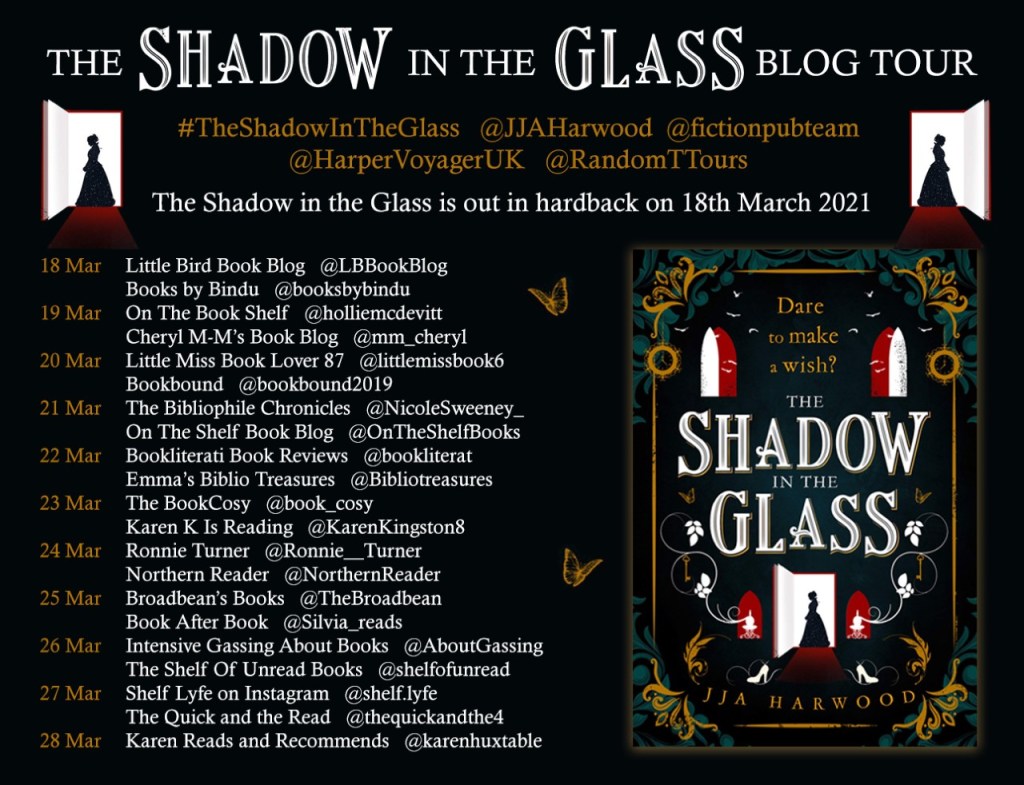
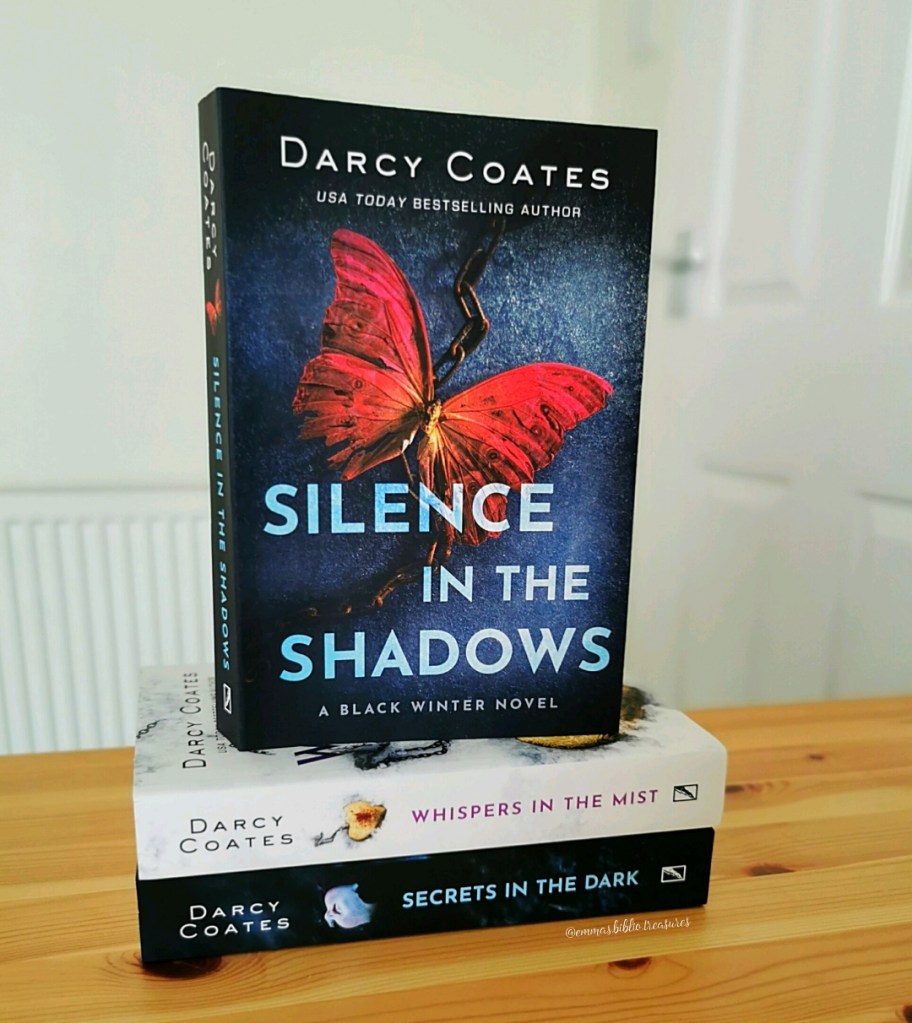


 Emma's Biblio Treasures