Categories
book reviews

Review: ‘The Girl at the Window’ by Rowen Coleman ⭐⭐⭐⭐⭐

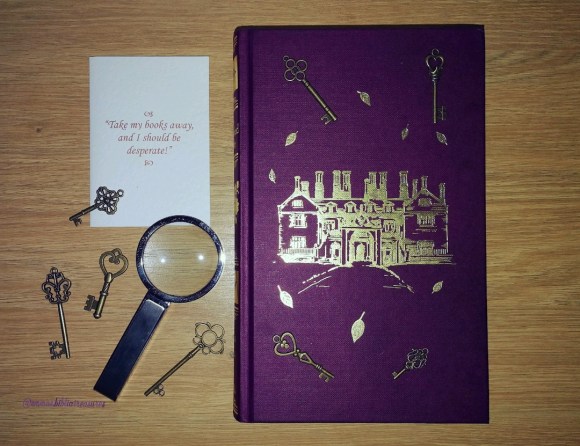
IMG_20190828_152708

SYNOPSIS:

A house full of history is bound to have secrets…

Ponden Hall is a centuries-old house on the Yorkshire moors, a magical place full of stories. It’s also where Trudy Heaton grew up. And where she ran away from…

Now, after the devastating loss of her husband, she is returning home with her young son, Will, who refuses to believe his father is dead. 

While Trudy tries to do her best for her son, she must also attempt to build bridges with her eccentric mother. And then there is the Hall itself: fallen into disrepair but generations of  lives and loves still echo in its shadows, sometimes even reaching out to the present…

A hauntingly beautiful story of love and hope, from the Sunday Times bestselling author of The Memory Book and The Summer of Impossible Things.

MY REVIEW:

Rowan Coleman blends fact and fiction to create a breathtaking novel that captivated my soul. A story that is part non fiction, part gothic fiction, part historical fiction and part family saga, the writing is atmospheric, eloquent, lyrical and poetic with just the right amount of goosebump-inducing terror.

Told by multiple narrators over three timelines, this is the story of Ponden Hall and some of the many people who have occupied its walls. Built by the Heatons in 1540, the family have lived there ever since. It is also the place that Emily Bronte would come to use the library and where she wrote her classic novel, Wuthering Heights. The infamous house felt like a character in its own right, and it when it spoke it gave me chills. 

Trudy has always been fascinated with her ancestral home and with the Brontes – Emily in particular. As a young girl she would whisper her secrets to her, imagining her walking the halls as she did. Though Trudy is reluctant to live with her estranged mother Mariah, she is happy to be back at Ponden Hall as its always been home. She immediately feels a peace upon returning and, once again, speaks to it like an old friend. One day, Trudy makes a startling discovery – two pages of writing bound in leather, one of which she instantly recognises as being written by none other than Emily Bronte. The other was written by a girl named Agnes who says she used to live in the house two hundred years before Emily visited. What is Agnes’ story? And could this lead Trudy to the infamous and elusive second manuscript of Emily Bronte? 

This is the second novel I’ve read by this author. I fell in love with Rowan’s writing style when I read The Summer of Impossible things last year and after reading this book I know that it wasn’t a one off. Her prose is a joy to lose myself in every page is filled with heart and emotion. In this book there was the addition of the stunning scene setting – everything from the descriptions of the house and landscape to her mother’s appearance was vivid and immersive. 

The author’s love of Ponden Hall, Wuthering Heights, and the Brontes shines through every page of this novel. I’m ashamed to say I’ve never got around to reading Wuthering Heights but have since bought it, as well as another based on Heathcliff, and can’t wait to read them and learn more. Her passion is contagious.

Having three narrators from different timeline was a choice I loved. I really liked each of them and thought each woman brought something important to the story. Though each was born hundreds of years apart and lived very different lives, they were also similar in many ways. Both of the older timelines were well researched and felt authentic. I felt like I was actually reading things that Emily Bronte and a girl from the 1600s had written and experienced. The supporting characters were all just as well written as the narrators. I loved young Will particularly and enjoyed the honesty he brought to the story in a way that only a child of that age can. He was unafraid to ask difficult questions or say things adults avoided and never doubted that the things he saw and experienced were real. He gave Trudy a reason to carry on after Abe’s death and a reason to return to Ponden Hall. Without these things she may never have made her discoveries.

I also really enjoyed the flashbacks that told Trudy and Abe’s love story. I liked the fact that Abe was a real character we got to know and not just Trudy’s late husband or Will’s late father. Those stories also gave us greater insight into who Trudy is, why she hadn’t returned to Ponden Hall in so many years, and why she and her mother are estranged. I have wondered about the author’s inspiration for how they fell in love as it was so romantic, wistful and funny. 

In The Girl at the Window the author has blended fact with fiction to create a haunting and enchanting story. It was a book where I relished every word and never wanted it to end. I don’t think I can do more to describe how much I love this book or how exquisitely written it is, so I’m going to finish by saying that you should go read this book now! Just be prepared to fall in love. 

Thank you to Ebury Press and Penguin UK for my gifted copy of this book.

Out now.  

RowanColeman.jpg

ABOUT THE AUTHOR:

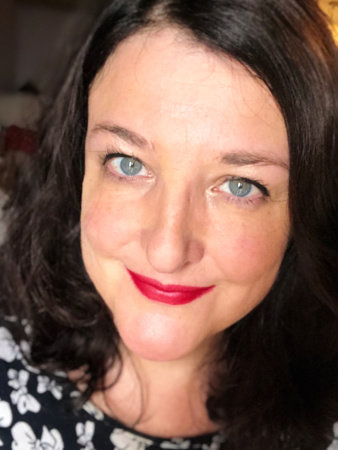
Rowan Coleman lives with her husband and five children in a very full house in Hertfordshire. She juggles writing novels with raising her family. She longs to live at Ponden Hall.

She is the bestselling author of THE MEMORY BOOK, WE ARE ALL MADE OF STARS and the critically acclaimed THE SUMMER OF IMPOSSIBLE THINGS. 

Find out more about Rowan at http://www.rowancoleman.co.uk, Instagram, Facebook or Twitter: @rowancoleman.

Categories
book reviews

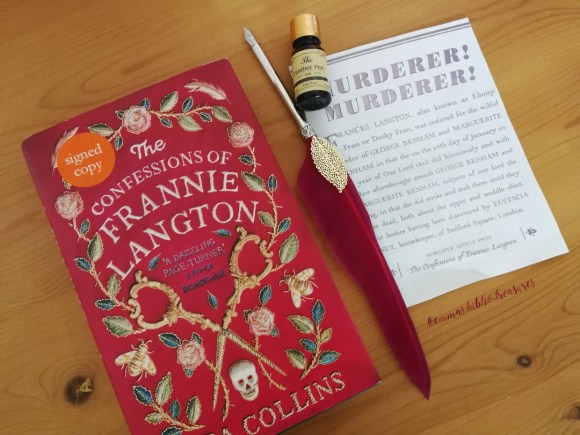
Review: ‘The Confessions of Frannie Langton’ by Sara Collins ⭐⭐⭐⭐⭐

QuotePhotob44e58fd

Happy Paperback Publication Day to the lovely Sara Collins and one of my favourite books this year.

SYNOPSIS: 

1826, and all of London is in a frenzy. Crowds gather at the gates of the Old Bailey to watch as Frannie Langton, maid to Mr and Mrs Benham, stands trial for their murder.

The testimonies against her are damning – slave, whore, seductress. And they may even be the truth. But they are not the whole truth.

For the first time Frannie has the chance to tell her story. It begins with a girl learning to read on a plantation in Jamaica, it ends in a grand house in London, where a beautiful woman waits to be freed.

But through her fevered confessions, one burning question haunts Frannie Langton: could she have murdered the only person she ever loved?

REVIEW:

“I would never have done what they say I’ve done, to Madame, because I loved her. Yet they say I must be put to death for it, and they want me to confess.But how can I confess what I don’t believe I’ve done?” 

This remarkable debut novel is one of those books that reaches into your soul. Forbidden love, secrets, lies, obsession, madness, brutality, rage and murder. This book is filled to the brim with them all and takes you on an unforgettable journey as alleged murderess Frannie Langton tells her story. 

The Mulatta Murderess is what the papers have called her. But her name is Frannie Langton. The former slave is standing trial for the murders of her Master and Mistress, George and Marguerite, but says she couldn’t have done it because she loved her mistress. But that’s all she will say. She offers no evidence of her innocence, nor any defense. Instead, she writes her so-called confessions that tell the story of her life from her beginnings on a Jamaican plantation to the present day as she awaits judgement.

“Reading was the best thing and worst thing that’s happened to me.”

I loved the use of Frannie writing her own story and how it wasn’t chronological. The switches in the timeline skillfully wove the past and present together in a way that felt fresh and compelling. It also increased tension, foreshadowed events, and kept us guessing while also answering some questions in piecemeal. The excerpts of trial testimony sporadically inserted into the book were the perfect way to provide flashes of another perspective while showcasing the many prejudices and uphill battle Frannie was facing in her case.

This story deals with many important and hard to digest issues from the era, such as slavery. Though as a house girl Frannie is spared things such as working in the fields in the searing heat each day, she is still treated as less than human. And when Miss-bella, her Mistress on the plantation, decides to teach Frannie to read and write she feels lucky and doesn’t heed the warnings from Phibbah, another slave, that an educated negro is a threat to the white man. But she soon learns Phibbah was right. Reading the appalling brutalities that Frannie and other slaves are subjected to is hard at times but it is an important and potent part of her narrative. 

“I was all anger. Anger a drumbeat. Anger,  steady as rain on glass. Anger, like a hot spurt of blood from a wound.”

At an author event I attended back in May Sara Collins said, “novels for me come from characters” and talked about how she didn’t have a book until she knew her characters. This is evident for me in what a complex and wonderful character Frannie is. She’s honest, raw and flawed. She’s brave and intelligent. She refuses to be told what her life will be and dreams of more. Perhaps the most prolific part of Frannie’s narrative is anger. She talks about her rage at being looked down on, when she witnesses injustice and at being told she can and will only ever be a slave. She is very self-aware about her anger and there are times she’s ashamed of it, but overall she owns and accepts her rage, even seeming to be fuelled by it. You see it present in varying ways throughout her life and I have a lasting image of her hands cramping into fists by her sides. With all this anger you’re probably thinking she’s obviously guilty, but what I love about this book is it turns so many assumptions on their head. As you read it isn’t so hard to imagine that maybe she didn’t do it. Most of the time I understood her fury and thought I would have felt the same in her shoes. 

The other characters in this novel are all equally well written. While her Masters were very different, they were also both vile, evil men who mistreated her and I despised them both. She had a very different relationship with each of her Mistresses: Miss-bella was someone I loathed but also pitied at times. She taught Frannie to read but knew the danger that brought and she still mistreated her in other ways. Madame Marguerite was the woman Frannie loved and who she claimed was in love with her. She is a selfish and self-indulgent character but other than that I found myself vacillating between many feelings about her over the course of the book as although Frannie is in love with her and clearly worships her, as an outsider you see how she manipulates, uses and even puts Frannie in danger by her actions. 

“My life began with some truly hard things, but my story doesn’t have to, even though nothing draws honesty out of you like suffering.”

Though this is one of my favourite books I’ve read this year, I’ve found this review hard to write. So much happens and it’s hard to know what details to give without spoiling it and to eloquently describe how this book made me feel. But I needed to write this review, to tell others about this incredible story.

The Confessions of Frannie Langton shows us the worst of humanity but also some of its kindness. We see loneliness, hopelessness, desperation, brutality, anger and death, but also strength, hope, love and passion. It’s a haunting, beautiful, somber, eye-opening, emotional and penetrating story that gives a voice to those that have been forced to remain silent and muted. At the time the book is set people of colour were seen as less than human and race is a big part of this story, but for me, this is overwhelmingly a story about what it means to be human. How the differences in our skin don’t change the way we feel, love or dream. And a reminder that how the way we treat others says much more about ourselves than anyone else. 

Sara Collins’ debut novel is a masterpiece and is not only one of my favourite books this year, but ever. She deserves every bit of the accolades and recognition coming her way. It’s been two months since I finished it and I still find myself often thinking about Frannie and her story. I also can’t stop telling people they should read it. I definitely fell a bit in love with the imperfect but wonderful Frannie and her story and am going to be the first in line for a ticket if I get my dream and they make it into a film. 

Out now.

2906

ABOUT THE AUTHOR

Sara Collins studied law at the London School of Economics and worked as a lawyer for seventeen years. In 2014 she embarked upon the Creative Writing Masters at Cambridge University, where she won the 2015 Michael Holroyd Prize of Re-creative Writing and was shortlisted for the 2016 Lucy Cavendish Prize for a book inspired by her love of gothic fiction. This turned into her first novel, The Confessions of Frannie Langton.